My media niche is something that is unique to many but also so popular at the same time. It is something that people want to do but never get the ball rolling and for me I wanted to do that. I wanted to create something I loved doing and that too fell in hand with the BCM241 course in which it was unknown to me a media niche of mine.
Flume’s current Instagram (09/09/2020)
The mystery and chase behind how artists across Australia manage to make it big is something that really interests me. The ways in which they market themselves on social media and interact with their fanbase which exposes this analytical framework in finding a problematisation. For me this problematisation is understanding how artists gain such a strong following and how they are able to maintain these fans. It is important that I use observational frameworks to do so by delving in and observing the artists from a fan perspective compared to my own experience. One artist that does this all so well is Flume. He even created a documentary series that highlights the stages of how he made it big in the music industry. He is one of two artists I will be further delving into through this research project as he made such a pro founding impact to the Future Bass genre, the genre in which I produce.
As we fall into the fourth week of the semester we have cleared through some research and pulled out resources that have shown to have factual assistance for us and our media niche research. We too are at the stage where we must consider ethical issues that may arise from our research findings and the way we do so. Ethics are a moral principle that in turn governs a person’s behaviour whether it be in general or through an activity. This is something that can cause extremely backlash and harm to both an individual or community if broken. As a researcher it is extremely important for them to consider ethics when conducting a research project no matter what scale of research it may be. As I myself am a researcher in this subject I must too consider the ethical issues that I could potential cause harm to if not properly assessed.
I first wanted to better grasp an understanding of paradigmatic or theoretical frameworks so that I could better my knowledge on what type of research framework would best suit me for my research data and field notes as well as allowing me to get some general direction to how to convey my research. I found two sources that really informed this better for me…
For me I felt as though I currently had a rough understanding of dance music as it was the project I was creating prior to this subject but I felt as though I definitely could learn more so therefore I did some research into the genre which is key to being able to even talk about dance music because each sub genre of music has its own world. I found one really informing article that looked at dance music and the history of the genre. It takes a timelined sequence of events through the evolvement of dance music which really showed how much things have changed in the genre.
Another key consideration I had to make sure of which all researchers must consider is the importance of ethics. Ethics as mentioned earlier if not considered or carelessly considered can cause harm to yourself or another person or community. Ethics for me will be extremely important to consider and the issues in which I have identified are; not display names from private messages without consent from the opposite party, I identified that I cannot use comments on social media posts as quotes of someones speech nor can I label their names. I must consider the risk of showing faces of other users without consent. These are all extremely important ethical standards to consider throughout my research and I will adhere to not breaching these throughout my research by referencing this blog if I feel as though I may be crossing some ethical issues or consult with teachers or peers.
“What Is Dance Music? – History & Types.” Study.com, 12 September 2015, study.com/academy/lesson/what-is-dance-music-history-types.html
As we further delve into what a media niche is, what media niche we want to further investigate we now have reached the next stage of the media niche investigation. This being problematisation essentials meaning finding a problem which requires a solution that is unknown. Firstly to begin this stage I problematise my media niche meaning understanding what the key issues are that are crucial in understanding our media niche better. As you know by now I have decided to investigate my own media niche and this being my music production project and exploring how the project has grown over time and the marketing strategies as well as target audience in order to get your name further.
To answer this first step it is crucial that to further understand my media niche it is essential to research who is currently in the dance music industry and understand the process it takes to become a successful artists. This new investigation will be to analyse artists and the ways they market themselves across all social platforms, gaining feedback from current artists in the industry and learning the process in the industry from a primary source.
This new trajectory of research will be beneficial for myself as well as others that want to learn more on the dance music industry. This leads me to identifying who my audience is being participants interested in making their own career out of the industry through my research this ranging from almost any age because age doesn’t matter in the music industry! Through my research I found that 49% of EDM listeners are female. This research will guide me to speak to future employers such a record labels and managers.
To begin this stage although it is crucial that for myself as a researcher I understand the methods of observation and autoethnography. For me these two are both something that fall hand in hand to create a reflective research task. Observation is the action of properly and closely observing something or someone. I will use this method to observe artists in the industry and see how they got to where they are a good way of doing this is through one of my personal favourite artists Flume who documented his career from beginnings to now on a series of YouTube videos.Autoethnography being a form of qualitative research in which is where I reflect and write on the explored experience. I will do this method by taking notes on each factual research matter I gather. I will use this research to take on myself and use the knowledge I find in putting it into play with my music production project (media niche). This therefore will help me to build my career up to the professional standard I investigate. In regards to recording these field notes I will note them through documentation on my laptop, audio/video recording for any face-to-face information I am able to gather. I will take pictures (screenshots) for visual evidence too. I will use paradigmatic frameworks to help me understand the human experience as this research method allows me as a researcher to fully submerse myself in viewing the investigation from a different point of view.
In order the understand how i am going to conduct my research I need to create a timeline or sequence of events to understand what I will research and when. This therefore allows me to maintain a ethnographic research investigation. (weeks 4-7)
week 4: Begin research on the dance music culture (target audiences, who is in the industry, how do you access the content, is my experience of listening to the genre altered in different environments)
week 5: I will find someone in the dance music industry that has really made a big impact to the genre and how their following has risen so much, how their listeners are streaming them (best platform), how many listeners they have (monthly, overall)
week 6: Analyse their marketing techniques they use i.e what socials they are on, how often they post, what content they post, whether they have merchandise business as well, how much they release albums/singles
week 6: Discover various record labels and managers in the industry and find out ways artists connect or get their music known (using primary research)
week 7: Discovering one more artists in the industry and compare findings to see if this is the common strategy in which artists are taking to reach fame and success in the music industry.
This research task will overall enable to me break down all the key steps and elements an artists must take to reaching success in the music industry and how they built up their profile. This will ultimate allow me to properly explore a new experience with my media niche and put it into tuition with my own music project.
As week 2 commences and I was ready to present my desired idea as written in blog post 1 I was able to propose my idea to the class in the Tutorial class for this week. This as written in Blog post 1 is a media niche of mine that is actually my own and that is my music business account. I am currently 1 part of a producing duo called RÜMA. We produce music in the future bass genre and is something i love to do hence why it has become my media niche because behind all the music making is too the marketing and social media identity creating on all social platforms.
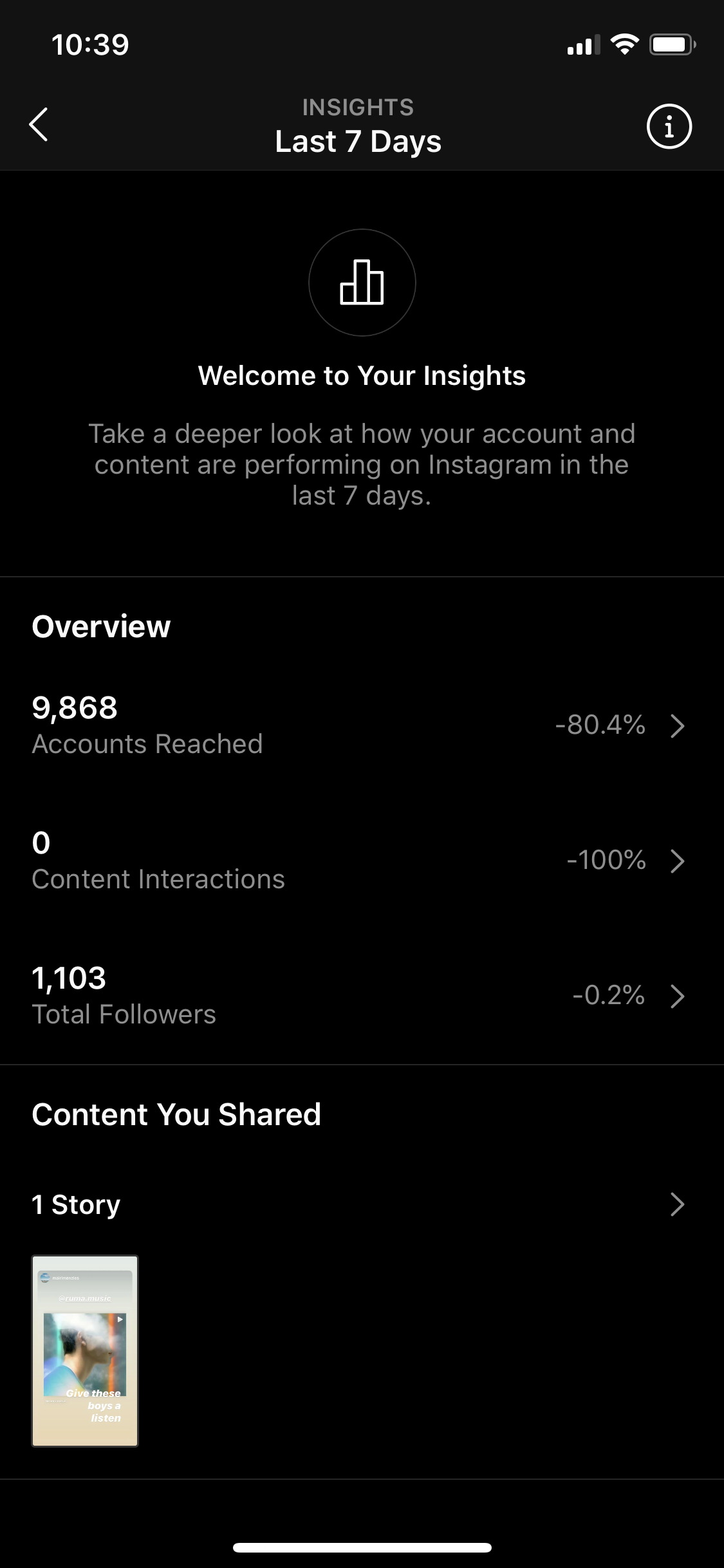
My field site in which my media niche is heavily present is social media as a whole. RÜMA was created in the back end of 2019 and therefore due to recent world issues have been able to put their work into full practical work i.e gigs or shows. This means their best/only way at this present time is to be marketing and interacting themselves with audiences via the online world. This field site map includes Instagram/Facebook as these are their best avenues in engaging with an audience. We have currently grown from 50 followers to 1.1K in just over 4 months now and as they continue to release this number is growing. We market our business by making engaging content such as interactive stories or posting photos in which invite the audience to engage and comment as well as of course posting previews and official releases on the page for the audience to see first. For us we are marketed soley from Wollongong region and this is so that record labels or followers are able to see where we are from for future gigs and shows that may arise and enable us to get local work. We offer our music across almost all streaming services which opens up to the next field site and these are the likes of Spotify, Apple Music, Amazon Music, Soundcloud, Tidal and many more for users to purchase or stream our tracks!
Through researching further into my own media niche I will be able to in a way sit back and take a thorough look at the strategies I previously was undertaking to market my music and get the RÜMA name out there into the world. Information such as statistics of how well my profile performs in the online spectrum through for example amount of weekly page vists the RÜMA site engages. I will further develop my own knowledge on not only the best strategies other influential music artists use to promote themselves but too learn more about the makings of music as well.
I look forward to delving deeper into my media niche and learning more ways that I can help improve my digital footprint with the association of RÜMA.
Media Niche’s are all around us. They are what we like to view or do during our spare time and we are extremely invested to. Whether this be Youtube videos or your favourite channel doing re-actions to, beauty tips, sports videos, DIY’s and further more to the various platforms such as podcasts on Soundcloud or Spotify about our favourite crime investigators. For me my media niche is something that is actually my own. This is my music project which I created on the back end of 2019. This niche is something that like many others to their favourite media niche am extremely invested to and am super excited to further research for this major project. This Niche is an always on-going development because with time comes change and my music or platforms are always changing over time.
My media niche is across all media platforms such as Instagram, Facebook, Twitter, YouTube, Soundcloud, Spotify to name a few under the stage name RÜMA. This project consists of two members being myself and my close mate. We proud ourselves on our music and the enormous connections we have created along the way. We create future bass music which is something that is evolving in the dance music genre with names associated with it such as Flume, Martin Garrix, The Chainsmokers, Marshmellow and many more. The presence outside our media platforms is to create an persona and presence of hardwork, motivation, friendliness, laid back, welcoming people that are trying to achieve their goal. For me I believe that we balance the platforms such as Instagram and Facebook well and do not completely saturate our platforms with musical content for example posting pictures of ourselves which allows the audience to see who we are and what we are about individually rather then just the RÜMA name. We constantly create interactive elements on our platforms such as the ability to comment on posts, replying to DM’s, interactive stories on our platform for audiences to contribute to such as questionares, polls, stickers etc. As mentioned my niche has various platforms such as Spotify, Soundcloud and YouTube for live shows that may arise especially during the COVID19 phase such as mix’s we have created and recorded. Our target audience overall is anybody! but particularly our target audience is younger generations between 16-35 years of age and/or those that love dance and future bass music as a whole.
This ethnographic research task will be great to research further into not only for myself but for others to learn about how I can improve the ways in which I run my RÜMA project across its media platforms, expand my target audience and too expand my followings at the same time as researching further into the project.




 Carl Querin